
Commercial Roof Systems That Protect Inventory
Commercial Roofing in Piedmont for buildings experiencing leaks, ponding water, or membrane deterioration
Ponding water on flat or low-slope commercial roofs signals drainage problems that accelerate membrane breakdown and eventually lead to interior leaks that damage inventory, equipment, and ceiling systems. Palmetto Contractors Group installs, repairs, and replaces commercial roofing systems across Piedmont, addressing everything from small punctures in TPO membranes to complete reroof projects on aging built-up tar and gravel systems. The decision to repair or replace depends on the remaining service life of the existing membrane, the condition of insulation layers beneath it, and whether the roof deck itself shows signs of water infiltration or structural fatigue.
Commercial roof repairs target isolated damage—patching torn membrane sections, resealing parapet wall flashing, or replacing failed HVAC curb boots that allow water entry around rooftop equipment. Full replacements involve removing existing membrane and insulation, inspecting the metal or concrete deck for corrosion or cracking, installing new rigid insulation boards to improve energy performance, and applying a new membrane system selected based on building use, budget, and expected service life.
Arrange an on-site evaluation to measure ponding depth, test membrane adhesion, and review drainage patterns that affect long-term roof performance.
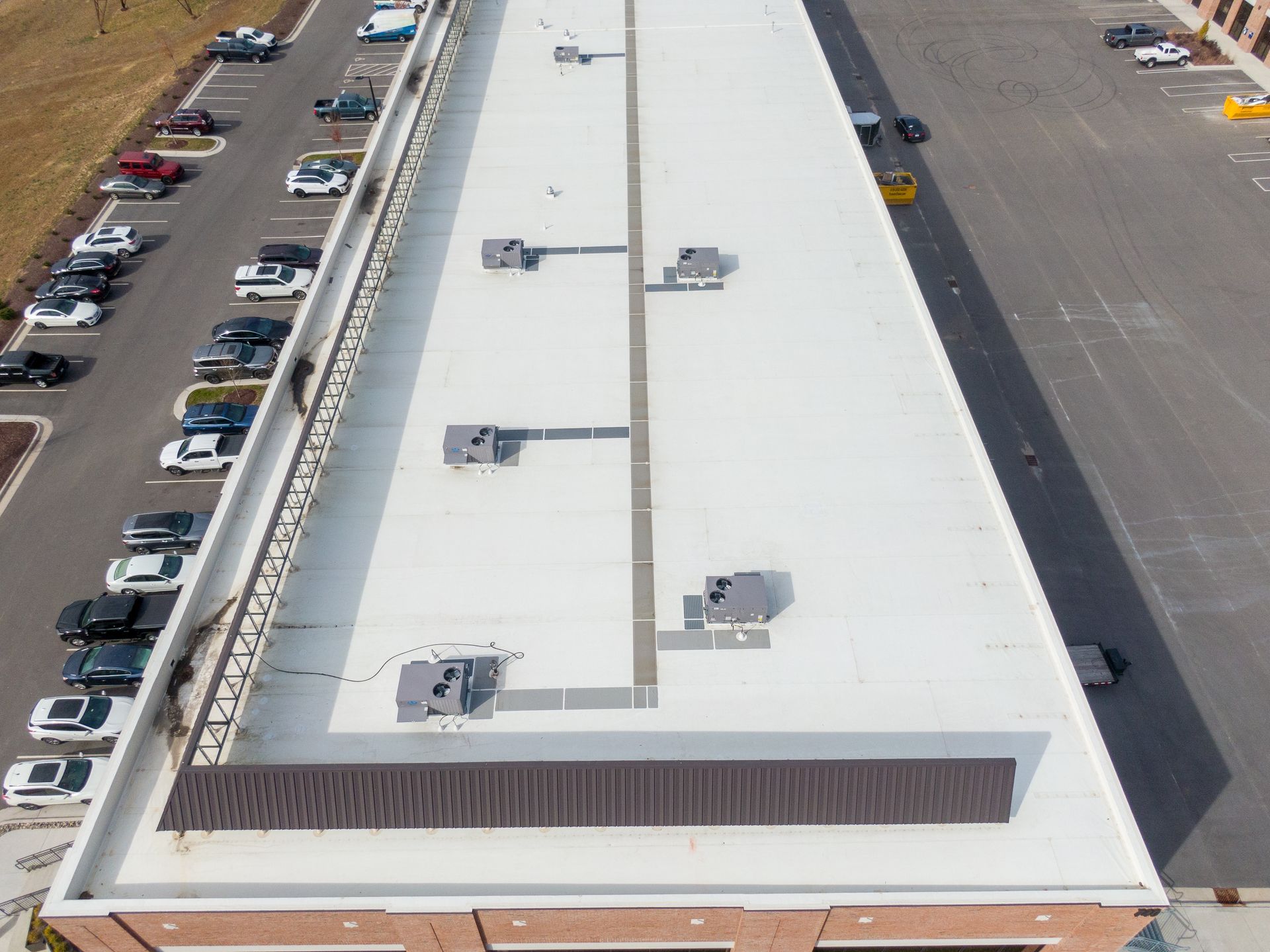
How Commercial Roof Installation Addresses Water Intrusion
Installation begins with a complete tear-off of existing roofing material down to the structural deck, which gets cleaned and inspected for rust, rot, or panel separation that requires correction before new layers go down. Insulation boards are mechanically fastened or adhered to the deck, followed by the membrane—whether TPO, EPDM, or modified bitumen—which is heat-welded, glued, or mechanically attached depending on the system and manufacturer specifications.
After the work finishes, you see a uniform membrane surface with no wrinkles, bubbles, or exposed seams, and all penetrations for vents, drains, and equipment are sealed with properly flashed boots that prevent water entry. Interior ceilings remain dry during rain events, and no staining appears on insulation or drywall, confirming that the building envelope now sheds water effectively to perimeter drains and scuppers.
Building maintenance schedules should include biannual roof inspections to clear drains, check flashing integrity, and identify small problems before they escalate into emergency leaks. Routine clearing of debris from low spots prevents organic material from blocking drainage paths and causing the ponding that shortens membrane lifespan.
Common Questions About This Service
Property managers and business owners often want to understand material options, timing, and what affects the decision to repair versus replace before committing to commercial roof work.
What factors determine whether a commercial roof can be repaired or needs replacement?
If the membrane shows localized damage but the insulation beneath remains dry and the deck is sound, repairs often suffice; widespread blistering, wet insulation, or deck corrosion typically requires full replacement to restore structural integrity.
How do you handle business operations during a commercial roof replacement?
Most work is scheduled in phases to minimize disruption, with noisy tear-off activities planned for non-business hours when possible, and interior spaces protected with tarps or temporary barriers to contain dust and debris.
What is the difference between TPO and EPDM membranes?
TPO is a heat-welded thermoplastic with high reflectivity that reduces cooling costs, while EPDM is a rubber membrane adhered or mechanically fastened with taped seams, offering durability and lower upfront cost but less solar reflectance.
Why does ponding water shorten commercial roof lifespan?
Standing water accelerates UV degradation of the membrane, promotes algae and moss growth that trap moisture, and stresses seams and flashing as the weight shifts during evaporation and refilling cycles common in Piedmont's humid climate.
How often should commercial roofs be inspected?
Twice-yearly inspections before and after storm season help identify small issues like loose flashing or clogged drains before they develop into leaks that damage interior finishes and disrupt business operations.
Palmetto Contractors Group coordinates with property managers to schedule work around tenant needs and provide documentation for building maintenance records. Request a roof assessment to review current conditions and discuss repair or replacement options tailored to your property's requirements.